Welcome To Your Personalised Nutrition Plan
200 Food Intolerance Hair Scan
A full Personalised food plan for only £49
This is a 200 food intolerance test. It is done with highly advanced bioresonace equipment. We use a hair sample that you must send us. It DOES NOT use blood. Once purchased we will email you the information we require and how to take the hair sample to send to us. Please give us 10 days turn around time for the results which we will email you. Usually we are faster than this!
Once purchased you will receive instructions on sending the sample to us.
Welcome To Your optimum metabolism
Your personalised nutrition plan
What's Body BioTyping?
Discover the hormonal secrets your body is hiding—find out the foods that exacerbate your unique profile.
Unveil the trendy diets that will truly transform you and those that maybe damaging you despite the current trend! You see..
One diet DOES NOT fit all.
And this isn't a one-size-fits-all menu; it's a bespoke nutrition blueprint tailored to your body shape, emotional eating patterns, and appetite—all revealed in this enlightening quiz.
Why do some diets work wonders for a few but flop for others?
With us, learn which foods and diet habits will elevate your well-being, which are neutral, and which to avoid.
Fine-tune your meal ratios and eating frequency for peak performance. Rev up your metabolism with a tailored macro-nutrient balance just for you, and find out the real deal on snacking.
You'll then be able to tweak your meals so they are in tune with your metabolism. Understand your body's needs and redefine your diet with us.
Want to feel:
Satisfied after and meal and not craving more food or sugar even though you feel full?
Want to lose weight without calorie restriction or hard dieting? Rather using a tailored health food plan that suits your metabolism.
Or maybe the opposite and you need to gain weight.
Want to feel emotional more stable rather than feeling shakey, jittery or "hangry"because you ate the wrong foods?
Want more energy as you are now supplying your body with the correct foods that suit your individual metabolism needs.
A Food Plan Specifically for YOU
What's Body BioTyping?
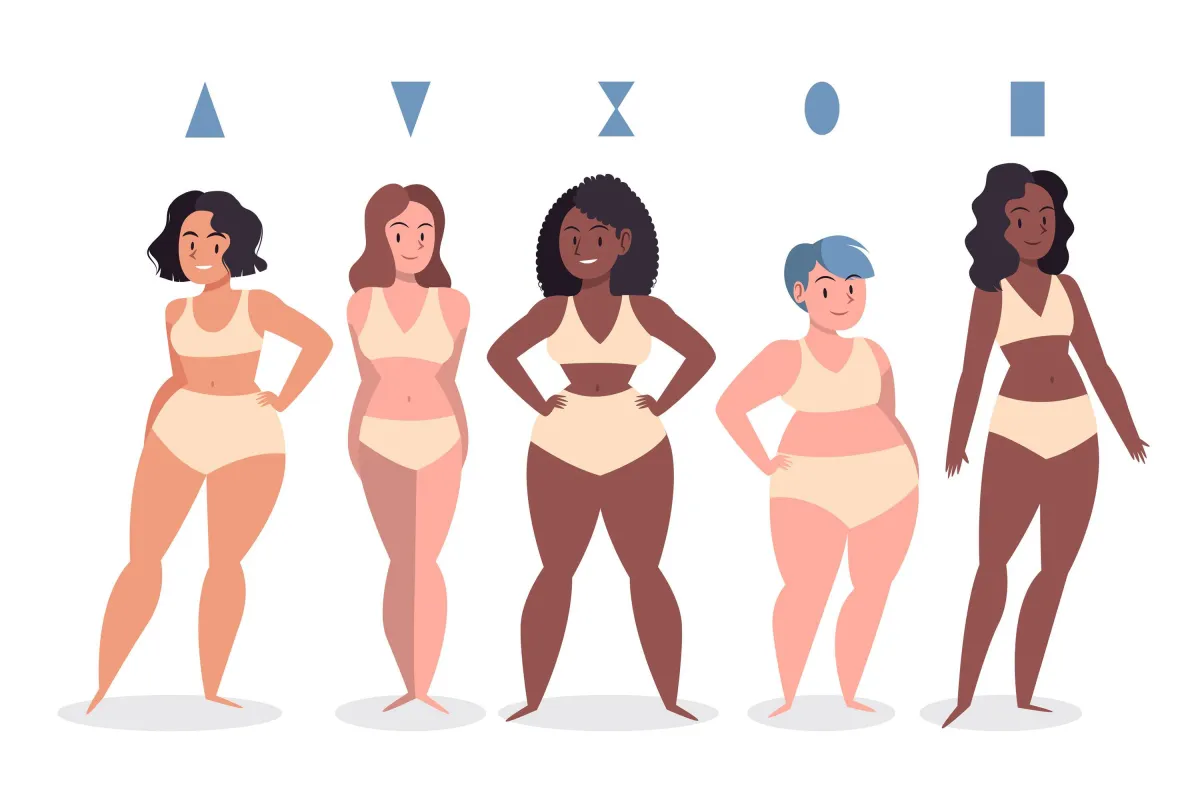
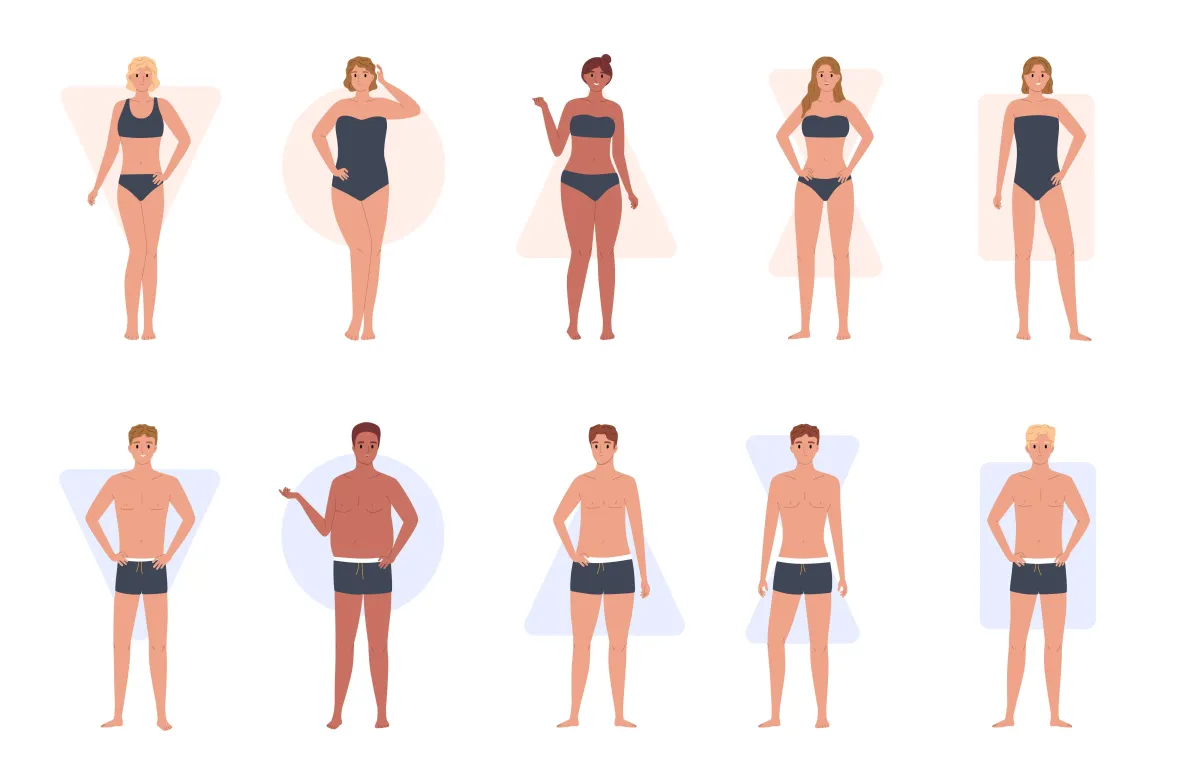
Have you noticed how we are all different shapes and sizes?
Or how foods affect everyone differently?
Or raher how foods affect your body differently to your friends?
How some people gain weight easily and others seem to eat loads and not gain any weight?
Or how you gain weight in particularly areas? Like tummy, bottom, hips, thighs?
Body Typing can explain these questions and give you tips towards healthy eating and lifestyle changes that are specific to your shape.
Did you know that particular areas of your body are sensitive to different hormones and therefore your body shape gives a clue to hormone imbalances? This works for men and women.
Once you know this hormone you can understand which foods to avoid as they will further create hormone imbalances. These hormone imbalance can cause weight gain
We want you to feel more of these:
Want to feel great?
✅ More energy overall
✅ A long lasting, balanced energy after a meal
✅ Full and satisfied after a meal but not bloated and “stuffed”.
✅ Emotionally happy and satisfied after a meal
✅ Losing weight if you want to
✅ Gaining weight if you want to
✅ No cravings for sugar, salt or fats after meal
✅ Improved mental awareness and no brain fog
And less of these:
❌ Energy slumps or crashes
❌ Not hungry or craving in-between meals or even shortly after meal
❌ Feeling too full and bloated after meals rather than satisfied
❌ Not getting blood sugar crashes after meals
❌ Not getting anxiety, worry or “hangry”
❌ Gaining weight without actually eating much
Is your metabolism fast or slow?
And there's even more...
What food Ratio's suit your metabolism
Is it possible to refine your ideal eating plan even more? Yes it is!
Hopefully you have done your Body BioTyping food plan and found your ideal food ratios and the foods that may not suit you due to your hormone dominance. All this was found our from your body shape and emotional characteristics.
We can also look deeper into how fast you process the foods you eat. A good word for this that you have probably heard is your metabolism. You can combine this with your Body BioTyping plan.
Ever noticed how some people eat loads and don’t gain weight and have loads of energy?
Or maybe how you just look at food and gain weight!?
Have you noticed that some foods can make you feel sluggish and others give you energy?
Finding out your metabolic rate can explain this and from there we can apply a food plan that takes this into account and SUPPORTS your metabolism so it ….
Peoples metabolism can be fast, slow and others somewhere in the middle. This is genetically how they are. If you ate local foods from where your genetic heritage originated from then the foods would balance your metabolism naturally. However, we don’t do that. Instead many of us base our diet on what’s in the new, on Instagram or is just the next “in” diet. Like intermittent fasting, vegan, vegetarian, carnivore. Some of these diets are the complete opposite of each other.
You can strengthen this metabolic rate by feeding it the correct foods. This brings it into balance. It might be that you want to slow it down or speed it up, to achieve BALANCE.
Confused about what diet is best for you? Say goodbye to guesswork!
Carnivore
Time restricted eating
Keto
Vegan
Vegetarian
16/8
Paleo
Meditarean
Pescatarean
5/2
High carb
Low carb
High fat
Balanced
Calorie restricted
Discover your ultimate wellness roadmap with our precise Hair Scan, pinpointing exact food intolerances that are holding back your health.
Dive into our tailored Quiz 1, matching your unique biotype to the diet that harmonises with your hormones.
Empower your journey with Quiz 2, revealing your metabolic rate to balance protein, fat, and carbs for peak energy.
Unleash a transformed you by personalising your eating
How It Works

Send us your hair
There are many variations of passages of Lorem Ipsum available, but the majority have suffered alteration in some form, by injected humour

Quiz 1
There are many variations of passages of Lorem Ipsum available, but the majority have suffered alteration in some form, by injected humour

Quiz 2
There are many variations of passages of Lorem Ipsum available, but the majority have suffered alteration in some form, by injected humour
Listen to Christian Bates, speak about the presonalised food plan approach

WelCome To Nutritionists
Body bio typing
There are many variations of passages of Lorem Ipsum available, but the majority have suffered.

WelCome To Nutritionists
Metabolism
There are many variations of passages of Lorem Ipsum available, but the majority have suffered.

WelCome To Nutritionists
Stress and skipping breakfast
There are many variations of passages of Lorem Ipsum available, but the majority have suffered.
More videos
WelCome To Nutritionists
Body bio typing
There are many variations of passages of Lorem Ipsum available, but the majority have suffered.
WelCome To Nutritionists
Metabolism
There are many variations of passages of Lorem Ipsum available, but the majority have suffered.
WelCome To Nutritionists
Stress and skipping breakfast
There are many variations of passages of Lorem Ipsum available, but the majority have suffered.
OUR TEAM
Meet Our Awesome Team




Blog & Articles

Stress, Cortisol & Leaky Gut: Could Stress Be Fuelling Your Digestion, Inflammation and Pain?

We often think of stress as “just emotional”.
A busy day. Financial worries. Poor sleep. Relationship tension. Constant phone notifications. Too much caffeine. Not enough rest.
And importantly, over-exercise can also be a stressor.
But at a basic physiological level, your body does not completely separate mental stress from physical stress. To your nervous system, stress is stress. It can push the body into fight-or-flight mode, increasing stress chemicals such as adrenaline and cortisol.
And one of the major places chronic stress can show up?
Your gut.
More specifically, your digestion, absorption, microbiome, immune signalling and gut barrier function.
And, as we have been exploring in our recent pain series, when the gut becomes irritated or inflamed, this may contribute to wider inflammation — which can then aggravate pain in muscles, joints and sensitive tissues.
Your Gut Is More Than a Digestive Tube
Your digestive system is lined with a sophisticated protective barrier made from tightly connected intestinal cells.
This gut barrier has several important jobs:
✅ Allow nutrients into the bloodstream
✅ Help keep toxins, microbes and unwanted food particles out
✅ Support a large part of the immune system
✅ Communicate constantly with the brain
✅ Help regulate inflammation
This gut-brain communication network is often called the gut-brain axis.
The gut and brain communicate through several channels, including the vagus nerve, hormones, immune messengers, neurotransmitters and the gut microbiome. Research shows the microbiome may influence emotional behaviour, stress systems, pain modulation and brain neurotransmitter systems. ([PubMed][1])
In other words, your gut is not just a food-processing tube.
It is part of your immune system, nervous system, hormonal system and inflammatory control system.
What Is Leaky Gut?
“Leaky gut” is the popular term for increased intestinal permeability.
This means the gut barrier becomes more permeable than it should be.
Normally, the cells lining the intestine are connected by structures called tight junctions. These include proteins such as occludin and claudins, which help regulate what passes through the gut lining.
A simple way to think of them is like security guards.
They allow useful nutrients through while helping to keep unwanted particles, microbes and toxins out.
But under certain conditions — such as chronic stress, gut inflammation, infections, alcohol, ultra-processed food, some medications, poor sleep and microbiome imbalance — this barrier may become less effective.
When this happens, substances from inside the gut may interact more strongly with the immune system.
This may contribute to symptoms such as:
🔥 Bloating
🔥 IBS-type symptoms
🔥 Food sensitivities
🔥 Brain fog
🔥 Fatigue
🔥 Skin flare-ups
🔥 Mood changes
🔥 Joint aches
🔥 Generalised inflammation
This does not mean leaky gut is the only cause of these symptoms. But it may be one important piece of the puzzle, especially when stress, digestion and inflammation are all present together.
How Stress Can Affect Gut Integrity
One major player is cortisol, your primary stress hormone.
Short-term cortisol is not “bad”. It is essential for survival. It helps you respond to challenge, regulate energy, manage inflammation and get through stressful moments.
The problem is when the stress response becomes chronic.
Long-term stress physiology may:
👎 Reduce digestive function
👎 Alter gut motility
👎 Affect stomach acid and enzyme output
👎 Change the gut microbiome
👎 Increase inflammatory signalling
👎 Contribute to increased gut permeability
👎 Affect nutrient absorption
👎 Worsen IBS-type symptoms
Research has also looked at CRF, or corticotropin-releasing factor, a key stress-signalling chemical involved in the HPA axis. Reviews suggest stress and CRF can influence gastrointestinal permeability, partly through mast-cell-related mechanisms. ([PMC][2])
In simple terms:
Chronic stress may make the gut barrier more vulnerable.
And if the gut barrier becomes irritated, this may feed into wider immune and inflammatory changes.
That is why stress is not just “in your head”. It can have very real effects throughout the body.
Stress Can Change Your Gut Bacteria Too
Your microbiome is highly sensitive to stress.
Studies suggest stress may:
👎 Reduce beneficial bacteria
👎 Alter bacterial diversity
👎 Change microbial metabolites
👎 Increase inflammatory signalling
👎 Affect gut barrier function
One study in young adults exposed to prolonged physiological stress found changes in gut microbiota composition and metabolism occurring alongside increased intestinal permeability. ([PubMed][3])
Even acute psychological stress may temporarily affect gut permeability. A human study using a public-speaking stress model found increased small intestinal permeability, particularly in people who also had a significant cortisol response. ([Frontiers][4])
So yes — stress before a presentation, exam, performance, difficult meeting or emotional event really can be felt in the gut.
That “nervous tummy” is not imaginary.
The Stress–Gut–Pain Connection
Stress does not only affect digestion.
It may also influence pain.
The gut-brain axis is closely linked to pain regulation, visceral sensitivity and inflammatory signalling. Stress is implicated in the development and worsening of visceral pain disorders such as IBS, and chronic stress may affect central pain pathways as well as gut motility and permeability. ([PubMed][5])
This matters because many people with chronic pain also experience some combination of:
🔥 Poor sleep
🔥 Stress overload
🔥 Digestive symptoms
🔥 Food reactions
🔥 Fatigue
🔥 Brain fog
🔥 Anxiety
🔥 Inflammation
The body is not made of separate departments.
Your gut, brain, immune system, hormones, muscles and joints are in constant conversation.
So if someone has ongoing pain, it may be worth asking:
Is the gut adding fuel to the inflammatory fire?
The Vicious Cycle: Stress → Gut Dysfunction → More Stress
The difficult part is that this can become a loop.
Stress affects the gut.
The gut affects the brain.
The brain affects stress.
An unhealthy gut may contribute to:
🔥 Increased inflammation
🔥 Altered serotonin signalling
🔥 Changes in mood regulation
🔥 Increased anxiety tendencies
🔥 Poor sleep
🔥 Cravings
🔥 Fatigue
🔥 Brain fog
This can leave people feeling trapped in a cycle of:
stress → poor digestion → inflammation → poor sleep → more stress
This is why gut work should not only be about food and supplements.
The nervous system matters enormously.
Signs Stress May Be Affecting Your Gut
Common clues include:
⭐ Bloating during stressful periods
⭐ Loose stools or constipation under pressure
⭐ IBS symptoms
⭐ Reflux
⭐ Feeling “wired but tired”
⭐ Poor sleep
⭐ Fatigue after meals
⭐ Sugar cravings
⭐ Anxiety with digestive symptoms
⭐ Skin flare-ups
⭐ Histamine-type reactions
⭐ Food sensitivities that worsen during stressful periods
None of these symptoms proves stress is the only cause. But if your digestion clearly worsens when life gets busy, your gut-brain axis may be asking for attention.
Final Thoughts
Stress is not just a mindset issue.
It is a whole-body physiological response that can influence digestion, inflammation, immune signalling, sleep, energy, mood and even pain sensitivity.
When stress becomes chronic, the gut often becomes one of the body’s major pressure points.
This does not mean every digestive symptom is caused by stress, nor does it mean “leaky gut” is the answer to every health problem. Human health is always more complex than a single explanation.
But what modern research continues to show is this:
Your gut and nervous system are deeply connected.
The way you sleep, recover, move, eat, think, breathe and manage stress can all influence gut health. And gut health may, in turn, influence how the rest of the body feels and functions.
Sometimes the body is not asking for more pushing, more intensity or more willpower.
Sometimes it is asking for safety, recovery, nourishment and regulation.
Supporting the gut-brain axis may involve looking beyond symptoms alone and paying attention to the bigger picture:
stress load, sleep quality, recovery, nutrition, movement, emotional health, microbiome balance and nervous system regulation.
Because healing is rarely about treating one body part in isolation.
The body works as an interconnected system. And the gut is one of its most important communication hubs.
References
Karl JP, Margolis LM, Madslien EH, et al. Changes in intestinal microbiota composition and metabolism coincide with increased intestinal permeability in young adults under prolonged physiological stress. American Journal of Physiology-Gastrointestinal and Liver Physiology. 2017;312:G559–G571. ([PubMed][3])
Kelly JR, Kennedy PJ, Cryan JF, Dinan TG, Clarke G, Hyland NP. Breaking down the barriers: the gut microbiome, intestinal permeability and stress-related psychiatric disorders. Frontiers in Cellular Neuroscience. 2015;9:392. ([PubMed][6])
Mayer EA, Tillisch K, Gupta A. Gut/brain axis and the microbiota. Journal of Clinical Investigation. 2015;125(3):926–938. ([PubMed][1])
Moloney RD, Johnson AC, O’Mahony SM, Dinan TG, Greenwood-Van Meerveld B, Cryan JF. Stress and the microbiota-gut-brain axis in visceral pain: relevance to irritable bowel syndrome. CNS Neuroscience & Therapeutics. 2016;22(2):102–117. ([PubMed][5])
Rodiño-Janeiro BK, Alonso-Cotoner C, Pigrau M, Lobo B, Vicario M, Santos J. Role of corticotropin-releasing factor in gastrointestinal permeability. Journal of Neurogastroenterology and Motility. 2015;21(1):33–50. ([PMC][2])
Vanuytsel T, van Wanrooy S, Vanheel H, et al. Psychological stress and corticotropin-releasing hormone increase intestinal permeability in humans by a mast cell-dependent mechanism. Gut. 2014;63(8):1293–1299. ([PubMed][7])
[1]: https://pubmed.ncbi.nlm.nih.gov/25689247/?utm_source=chatgpt.com "Gut/brain axis and the microbiota - PubMed - NIH"
[2]: https://pmc.ncbi.nlm.nih.gov/articles/PMC4288093/?utm_source=chatgpt.com "Role of Corticotropin-releasing Factor in Gastrointestinal ..."
[3]: https://pubmed.ncbi.nlm.nih.gov/28336545/?utm_source=chatgpt.com "Changes in intestinal microbiota composition and ..."
[4]: https://www.frontiersin.org/journals/cellular-neuroscience/articles/10.3389/fncel.2015.00392/full?utm_source=chatgpt.com "The Gut Microbiome, Intestinal Permeability and Stress ..."
[5]: https://pubmed.ncbi.nlm.nih.gov/26662472/?utm_source=chatgpt.com "Stress and the Microbiota-Gut-Brain Axis in Visceral Pain"
[6]: https://pubmed.ncbi.nlm.nih.gov/26528128/?utm_source=chatgpt.com "Breaking down the barriers: the gut microbiome, intestinal ..."
[7]: https://pubmed.ncbi.nlm.nih.gov/24153250/?utm_source=chatgpt.com "Psychological stress and corticotropin-releasing hormone ..."
Need Help?
If you would like naturopathic help with inflammation, stress support, hormone support or gut health, email: [email protected]
If you would like help with chronic pain, call reception and ask to book an initial consultation with Kate: 01444 410944

OUR TESTIMONIALS
What they’re talking about
our company

John Doe
Finance Manager
I loved the customer service you guys provided me. That was very nice and patient with questions I had. I would really like definitely come back here. Thank you for yours service

Jane Doe
Finance Manager
I loved the customer service you guys provided me. That was very nice and patient with questions I had. I would really like definitely come back here. Thank you for yours service

John Doe
Finance Manager
I loved the customer service you guys provided me. That was very nice and patient with questions I had. I would really like definitely come back here. Thank you for yours service
Frequetly Asked Question
Your Title Here
Lorem ipsum dolor sit amet, consectetur adipisicing elit. Autem dolore, alias, numquam enim ab voluptate id quam harum ducimus cupiditate similique quisquam et deserunt, recusandae.

Your Title Here
Lorem ipsum dolor sit amet, consectetur adipisicing elit. Autem dolore, alias, numquam enim ab voluptate id quam harum ducimus cupiditate similique quisquam et deserunt, recusandae.
Your Title Here
Lorem ipsum dolor sit amet, consectetur adipisicing elit. Autem dolore, alias, numquam enim ab voluptate id quam harum ducimus cupiditate similique quisquam et deserunt, recusandae.
Get In Touch
Assistance Hours
Mon – Sat 9:00am – 8:00pm
Sunday – CLOSED
Phone Number:
XXX-XXX-XXXX