Call to book or for more information - 01444 410944


Food intolerance Testing & Bioenergetic Scanning
Find your food intolerances, improve your health & reduce stress
- Christian Bates BSc (Hons), DO, ND
What is the difference between an allergy and an intolerance?
It is important to understand this and the limitations of each test when looking for an “allergy” or an “intolerance”
IgE allergy response
When the word allergy is used this usually denotes that the person has a serious reaction to a food or chemical. These reactions come on quickly and the body is having an exaggerated, dangerous immune response. Often the person would have to be rushed to the hospital.
One of the most common most foods to trigger an allergy reaction are peanuts. This type of allergy can be tested for using blood or a skin prick test and may be available through your GP. This allergy reaction is called an “IgE” response. It is important to understand that the allergy test we offer at The Perrymount is NOT this type of test.
IgG intolerance response
Food intolerances are becoming more and more common and it is possible to test for these with a blood test too. This is called an IgG response. This type of reaction can have a delayed response and can be called an ‘intolerance’ rather than ‘allergy’. However, these intolerances can still make you feel really unwell and are linked to many, many symptoms affecting virtually every organ in the body. One of the most common being digestive issues.
At The Perrymount we have blood tests available for you to test for intolerances. However, we have another non-invasive, more convenient and economical option for you.
Blood test prices:
30 foods, blood pinprick £113.00
90 foods, blood pinprick £185.00
A conversation about your symptoms, food and wellbeing.

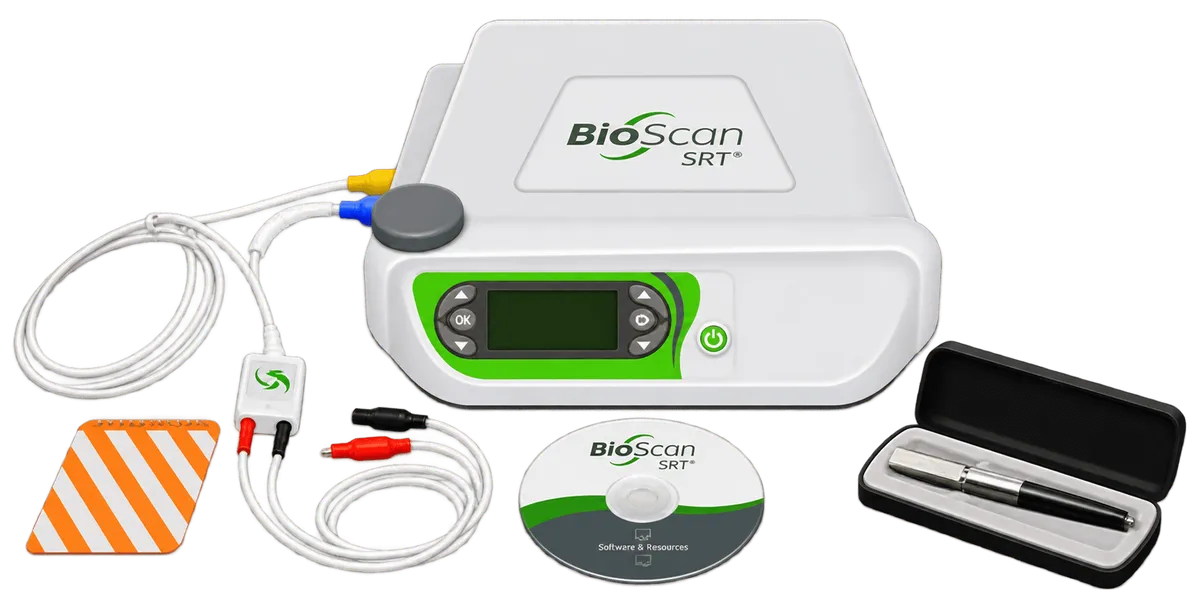
The clinic offers consultations that may include discussion of food-related concerns and complementary approaches such as BioScan SRT or Avatar bioenergetic scanning.
These devices are not validated diagnostic tests for food allergy or intolerance. They should not be used to identify foods that cause disease, and their readings should not replace established medical assessment.
If you are concerned about a reaction to food, the safest first step is to discuss your symptoms with your GP or an allergy specialist.
Food intolerance symptoms can include:
Asthma
Arthritis
Migraines
Ear Infections
Eczema
Sinusitis
Congestion
Throat clearing
Skin problems
Colitis
Behaviour issues in children
Hyperactivity in children
Bloating
Migraines
Headaches
Cough
Runny nose
Feeling under the weather
Stomach ache
Reflux
Irritable bowel
Diarrhoea / constipation
Hives
Start with the right questions.
A clear history is often the most useful place to begin when exploring food-related symptoms.
01
Describe your symptoms
Note what you ate, when symptoms began, how long they lasted and whether the reaction has happened before.
02
Get suitable advice
Speak with your GP or an allergy specialist about the right assessment. Do not remove major food groups without appropriate advice.
03
Discuss support options
Once medical concerns have been addressed, the clinic can discuss whether its wellbeing consultations may be useful alongside your care.
Can the Perrymount help with intolerances?
es we can. Firstly we can run a food intolerance test using the BioScan SRT or Avatar device. This isn’t an IgE or IgG test and requires no blood. It is also possible to investigate the root-causes of the food intolerances. Read on to learn more…
Finding food intolerances using the BioScan SRT & Avatar device
The BioScan SRT and Avatar use non-invasive biofeedback technology to assess the body's responses to different substances, including foods and chemicals.
A Personalised Approach to Your Health
Our practitioners look beyond food sensitivities to explore lifestyle factors such as digestion, stress and general wellbeing. Based on your consultation, we can provide guidance on food choices, meal planning, supplements and lifestyle changes.
Our goal is to help you understand your body and make positive changes to support your long-term wellbeing.
Stress, digestion and intolerance
Possibly one of the most common scenarios of digestive discomfort and food intolerance is being overly busy and stressed. Are you stressed? Are you busy? Are you rushing to work, or to drop the kids off everywhere? The body is controlled by two sides of the nervous system. The “rest and digest” side and the “fight or flight” side which is activated during stress (or being busy!). These are natural responses but the problem is that the “stress” side of the nervous system shuts the stomach and digestion down. This can trigger food intolerances due to poor digestion of the foods. This situation can be distinguished and helped with supporting supplements found by having an Avatar or BioScan SRT appointment with Christian Bates.
Not sure where to start?
Speak with the clinic team about your concerns and the options available. For suspected food allergy, please seek medical assessment first.

New to our clinic? Leave your details below to receive a £15 voucher off your first osteopathy consultation and £15 off your first massage
The Perrymount Clinic
Unit 5, Hurstwood Grange
Hurstwood Lane, Haywards Heath
West Sussex, RH17 7QX

Quick Links
Book Online
Therapies
Practitioners
Our Blog
Contact Us
View Map
Privacy Policy
© 2026. The Perrymount Clinic. All Rights Reserved.